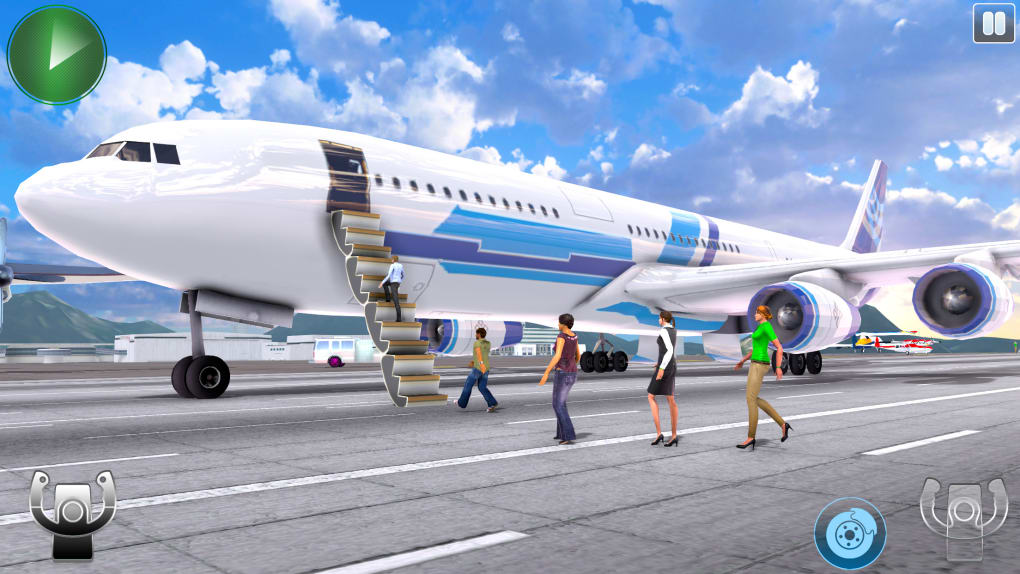
This guide outlines the technical details you’ll need to run Avia Fly Game. Getting your PC ready means you can enjoy flying, not on fixing problems. We’ll walk through the hardware and software necessary, from the bare minimum to the recommended configuration. Verifying these details before you install can prevent frustration later. Let’s set up your computer for departure.
Why Specs Are Important for Your Flight Experience
Ignoring system requirements for a flight simulator is a fast track to frustration. Your PC’s specs influence how the game performs and appears. If your hardware doesn’t meet the bar, that steady ride over the Cotswolds can turn into a choppy, stuttering mess. The proper configuration lets you notice the fine points: the fog drifting over the Thames, the rain on your cockpit glass, the detailed gauges in front of you. Aligning your hardware with these specs means you can plan for upgrades and know what to expect, resulting in more time spent enjoying the skies.
Essential Peripherals and Control Devices
You can pilot with a keyboard and mouse, but it feels like typing a letter when you should be painting a picture. A basic joystick with a throttle lever is the first real upgrade. It gives you precise control and something physical to hold. If you’re serious, a yoke and rudder pedals simulate the feel of a light aircraft or an airliner. A head-tracking device is a game-changer. It enables you look around the cockpit just by moving your head, which is vital for checking instruments and looking for traffic on your wing.
Good audio counts more than you think. A decent pair of headphones enables you hear the subtle shift in engine pitch, the rumble of the landing gear, and the whistle of the wind. For long-haul virtual flights, a second monitor is incredibly handy for PDF charts, checklists, or flight planning tools. These peripherals aren’t on the official requirements list, but they build immersion. They transform the experience from something you watch on a screen to something you feel in your hands and ears.
Suggested System Requirements for Peak Performance
This is the ideal range. Hitting these specs unlocks the game’s visual potential and keeps the frame rate stable. The difference is immense. Instead of fuzzy buildings, you’ll spot specific landmarks as you circle the Shard. The lighting changes realistically with the time of day. Meeting these requirements converts the simulator from a technical exercise into a proper hobby. This is where the game begins to feel real.
CPU and RAM for Seamless Sailing
Step up to a processor like an Intel Core i5-8400 or AMD Ryzen 5 1500X. The extra power chews through complex flight models, detailed weather, and crowded scenery without slowing down. Pair it with 16 GB of system RAM. That extra memory provides less stuttering when you approach a new area and lets you use a browser with charts or Discord in the background without the game protesting. Your whole system will feel more reactive.
Graphics Card and Storage Options
A stronger graphics card makes all the difference. Go for an NVIDIA GTX 1070 or an AMD Radeon RX 5600 XT, with 6 GB of VRAM or more. This hardware delivers better lighting, denser clouds, sharper textures, and higher resolutions. For storage, a Solid-State Drive (SSD) with 50 GB free is practically mandatory. An SSD cuts loading times, stops textures from popping in late, and streams the world seamlessly as you fly. It’s vital for a trip from Glasgow to Southampton without issues.
Software Dependencies and Available Platforms
Avia Fly Game is a Windows application. It relies on standard Microsoft frameworks. The main one is a modern version of DirectX for graphics and sound. The game installer should handle installing this for you. You’ll also need the latest Visual C++ Redistributable packages, which many Windows apps use. Again, the installer usually takes care of this. The game does not run on macOS or Linux. There are no versions for Xbox or PlayStation consoles.
Keep your graphics card drivers current https://aviafly.eu/. NVIDIA and AMD release updates that often boost performance for new games. You can get these directly from their websites. The game supports Windows 10 and 11. We build it for the latest stable version of Windows. If you’re using an older or unsupported version of the OS, you might experience crashes or find that some features don’t work. A updated PC is a reliable PC.
Basic System Requirements to Take Flight
These are the bare essentials needed to begin the game. Think of it as the entry ticket. Your PC will run Avia Fly Game, but you’ll be using lower graphics settings. You’ll see simpler landscapes, shorter draw distances, and less dramatic weather. It’s functional. It lets you take off and lets you learn the controls, but don’t count on to be wowed by the view. This is intended for older systems or budget constraints.
Operating System and Processor
You need a 64-bit copy of Windows 10. For the chip, target something like an Intel Core i5-4460 or an AMD Ryzen 3 1200. This CPU handles the essential math for flight physics and basic scenery. It does the job, but add a busy airport like Heathrow or a storm system, and you may experience some slowdown. Ensure your Windows is up-to-date. Those updates often bring fixes that help games run more smoothly.
RAM, Graphics, and Disk Space
8 GB of RAM is the minimum. Your graphics card should support DirectX 11 and have at least 2 GB of its own memory (VRAM). An NVIDIA GTX 760 or AMD Radeon RX 560 are solid options. This enables the game to render the aircraft and the world, just without much detail. You also require 50 GB of free hard drive space. A traditional hard disk drive (HDD) will do the job, but be prepared for long waits when launching. An SSD is a far superior choice if you can manage it.
Ideal or “Ultra” Requirements for Peak Fidelity
This is for the enthusiast who wants every single option maxed out. We’re discussing 4K resolution, ultra-detailed textures, and frame rates that remain high even in the worst weather. You’ll see individual leaves on trees from a thousand feet up. Every control in a detailed cockpit module will appear crisp. This rig pushes Avia Fly Game to its absolute limit, creating the most immersive home flying experience possible.
An Intel Core i7-9700K or AMD Ryzen 7 3700X processor supplies all the computational muscle you could require. Combine it with 32 GB of fast DDR4 RAM to process anything in the background. The star of the show is a high-end graphics card, like an NVIDIA RTX 3070 or AMD Radeon RX 6800 with at least 8 GB of VRAM. A fast NVMe SSD (1 TB is a good target) is non-negotiable for quick asset loading. To finish it off, consider a proper flight yoke, rudder pedals, and a high-refresh-rate monitor. This isn’t just experiencing a game; it’s constructing a cockpit.
Enhancing Performance on Your Particular Setup
Even a powerful PC can gain from some tweaking. Start with the graphics preset that fits your hardware, like ‘High’ for recommended specs. Then adjust sliders one by one. The big performance hitters are usually ‘Terrain Level of Detail’, ‘Shadow Quality’, and ‘Cloud Rendering’. If your frames drop flying into London, try lowering these. Anti-aliasing smooths jagged edges but is heavy. TAA or FXAA often give a good result without as much cost. If you have a G-Sync or FreeSync monitor, try turning off VSync.
What’s running in the background can hurt your frame rate. Close your web browser, especially if you have dozens of tabs open. Shut down streaming apps and file-sharing clients. On a desktop, set your Windows power plan to ‘High Performance’. Laptop users must check that the game is using the powerful dedicated NVIDIA/AMD GPU, not the weaker integrated graphics. After you update your graphics drivers, clearing the game’s shader cache from its settings can fix new stutters. These small adjustments can smooth out a surprisingly bumpy ride.
Connection Needs for Multiplayer and Patches
You need a reliable internet connection for a few key things. First, to install the game itself and all the updates that bring new planes, airports, and fixes. Second, for co-op flying. Sharing the UK’s virtual skies with other pilots is a big part of the fun. A broadband connection with at least 5 Mbps download speed is a good foundation for smooth online play. Faster speeds will make downloading those 50 GB updates much less painful.
For online play, a low and stable ping (latency) is more vital than raw download speed. It keeps you in sync with other aircraft, so no one looks to jump around the sky. A wired Ethernet connection is always preferable than Wi-Fi for this, especially during precise formation flying or busy online events. Also, ensure that your firewall or router isn’t blocking the game. You need a clear path to the servers for live weather, navigation data, and community features to operate properly.
Resolving Common Technical Issues
Issues occur. Usually, they have simple fixes. If the game fails to launch, double-check your system against the minimum specs. Then, upgrade your graphics drivers. Occasionally, simply running the game as an administrator can fix launch errors. For random crashes, use the repair function in the game launcher. It checks for missing or corrupted files. If you’re running with 8 GB of RAM and the game lags or crashes, close every other program. A RAM upgrade may be the real solution.
Strange graphics, like flickering textures or strange colours, often indicate the graphics card. Do a clean reinstall of your drivers using a tool like DDU (Display Driver Uninstaller). If performance is poor on good hardware, the game might be running on the wrong GPU (a common laptop issue). Commence from a low graphics preset and work up. For problems you can’t solve, the official support forums are a great place to search. Chances are another pilot has had the same issue and found an answer.